




Your cart is currently empty!
Continue shoppingHistory: Comorian spices, a treasure of the Indian Ocean
Welcome to our enchanting world dedicated to spices! Here, spices are not mere culinary ingredients but aromatic good-luck charms that carry us off to distant, magical lands.
Since time immemorial, they have been the guardians of exquisite flavours, bewitching aromas and a fascinating history. For millennia, spices have played an essential role in cuisine, culture and trade around the world. In this article, we will take you on a sensory, dreamlike journey through the exotic scents and varied uses of spices, where reality and utopia merge.
The origins
The origin of spices goes back to a distant era, when ancient civilisations began to explore the world in search of riches and new lands. Spices played a central role in the great geographical discoveries and influenced the course of human history.
The first mentions of spices date back more than 4,000 years BC. The ancient Egyptians already used spices such as cinnamon, coriander and saffron for their medicinal and culinary properties. These precious goods were often traded along overland trade routes between Egypt, Mesopotamia and India.
Demand for spices grew rapidly, leading to the creation of legendary trade routes such as the Silk Road and the Spice Route. These trade routes linked East and West, allowing spices to be carried to distant lands such as Europe, Africa and even China. They opened up economic and cultural opportunities, encouraging exchange between different civilisations.
And the Comoros in all this?
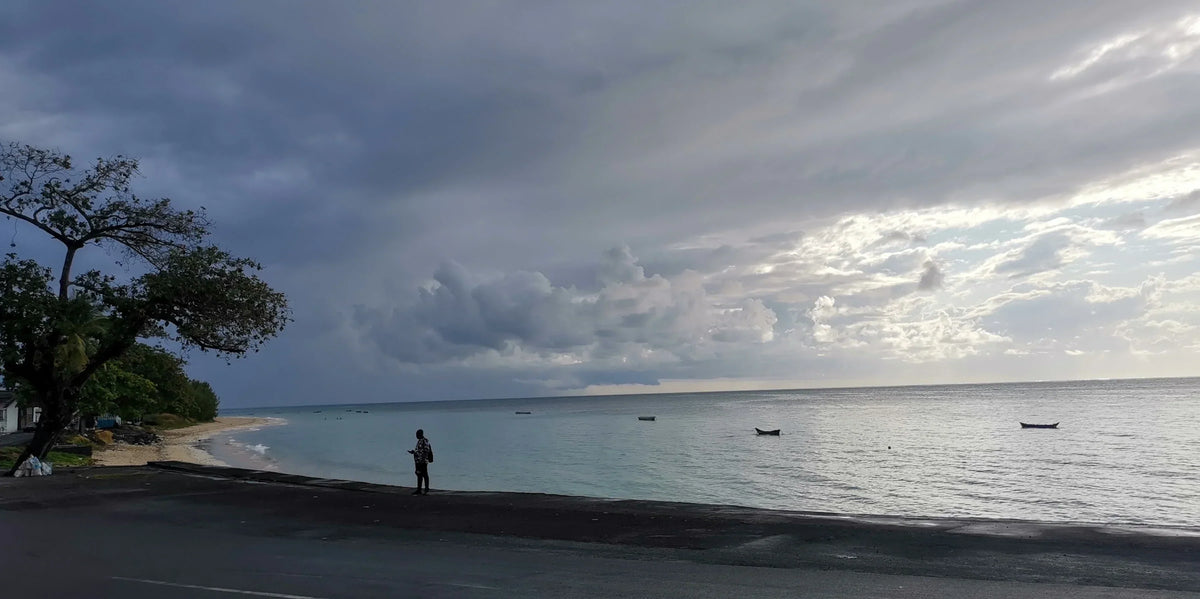
Before revealing everything, for those who may not know: the Comoros are an archipelago in the Indian Ocean, north-west of Madagascar and east of Africa, near Mozambique and Tanzania.
The history of spices in the Comoro Islands is closely tied to the rich maritime and trading history of the Indian Ocean region. The islands were a strategic point along the ancient trade routes that linked Asia, the Middle East and Europe.
Spices such as clove, nutmeg, pepper, vanilla and cumin originate in South-East Asia and the islands of the Indian Ocean, such as the Moluccas in Indonesia and Madagascar. Over the centuries, Arab, Persian and Indian traders sailed the Indian Ocean, bringing with them the treasures of spices and trading them with local populations.
The Comoros caught the attention of Arab merchants because of their strategic location and their abundance of natural resources. Spices were highly prized for their medicinal properties, their culinary uses and their role in perfumery and religious rituals.
Over time, the Comoros became an important centre of the spice trade. Arab and Persian merchants established trading relations with the local sultans and exchanged spices for other goods, such as ivory, gold, slaves and textiles.
Spices also attracted the attention of Europeans, who were looking for ways to bypass the trade routes controlled by Arab merchants. Portuguese explorers were among the first Europeans to reach the Comoro Islands in the early 16th century, seeking to establish their own route to the sources of spices in Asia. However, the European presence also led to conflict and struggles for control of resources and of the spice trade.
With time, the Comoros became a cultural melting pot, blending African, Arab, Persian and European influences. Spices were woven into local cooking, giving rise to unique and deliciously fragrant dishes.
Cook with vanilla from the Comoros
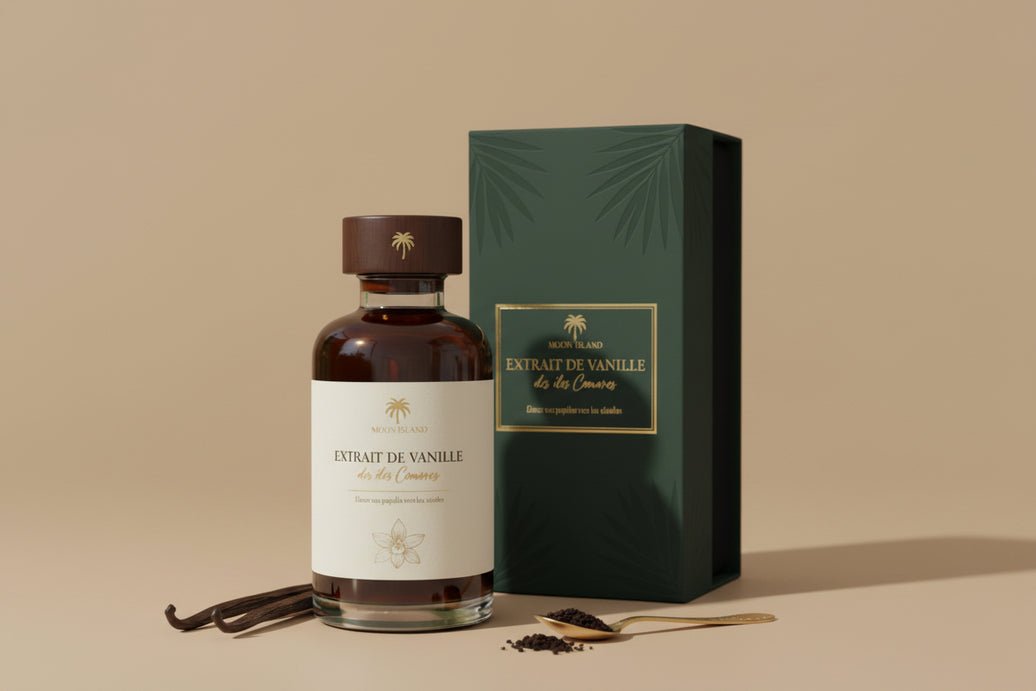
Vanilla pods, powder, extract and caviar, selected at the source by Moon Island.
Discover our products